


Choosing eco-friendly packaging materials starts with the full package: the board, coatings, inks, inserts, and the disposal options available to the customer. Brown color, a leaf graphic, or the word “biodegradable” does not establish the environmental performance of a finished box.
For a paperboard carton, start with the protection the product needs, compare documented material specifications, and ask how the complete package should be handled after use. This guide focuses on practical choices for printed retail boxes, soap sleeves, and skincare packaging.

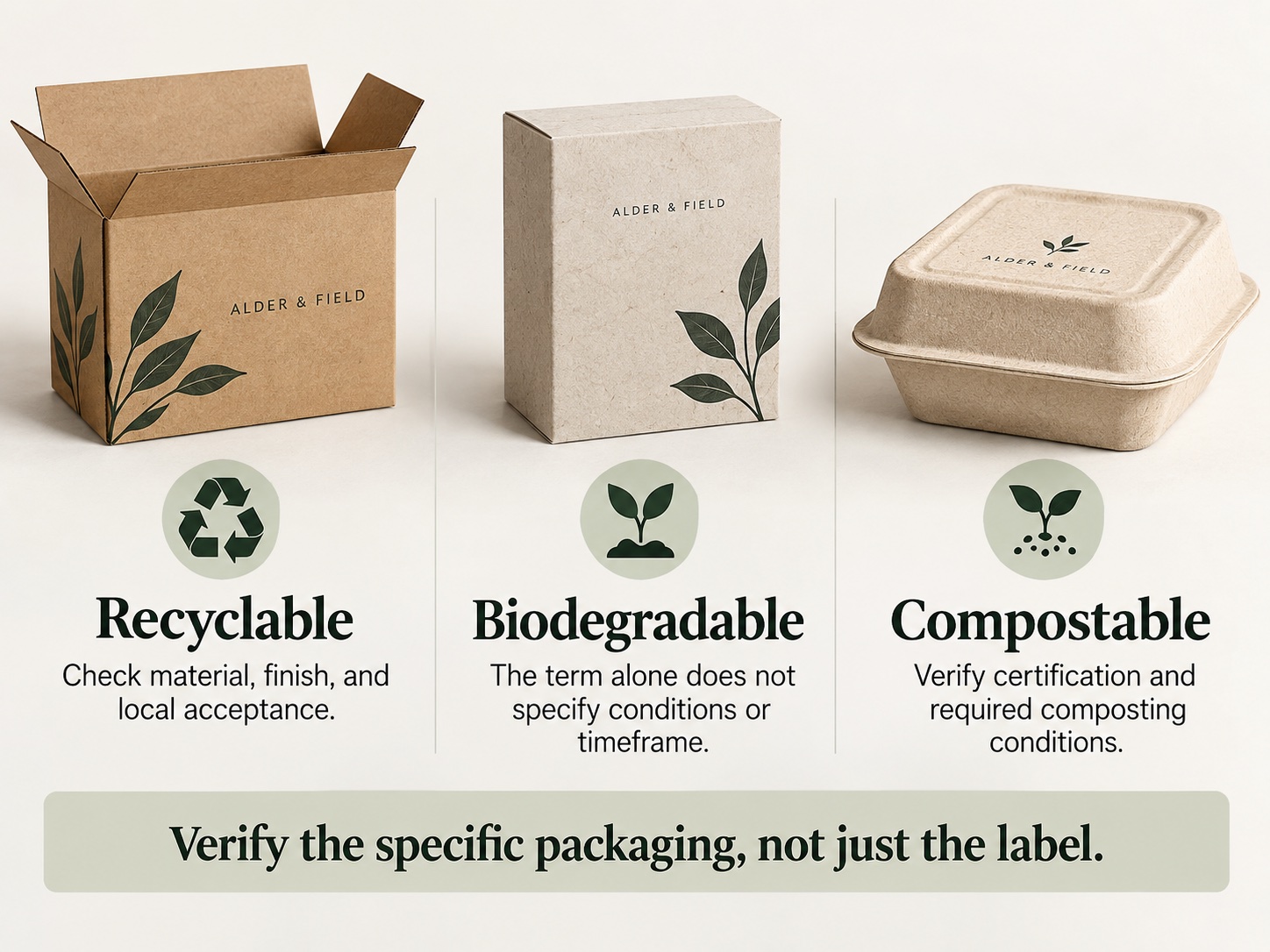
Recycled, recyclable, and compostable mean different things
Recycled content describes the material going into the package
A recycled-content statement should identify the proportion and material it describes. Post-consumer content comes from material recovered after consumer use; pre-consumer content has a different origin. Ask for documentation for the selected board rather than assuming every stock in a supplier's range has the same composition.
Recyclable describes a recovery route after use
A paper-based package is not automatically accepted everywhere. Local collection rules, package size, contamination, and added layers can affect what happens to it. Check the complete specification, including windows, films, labels, and inserts, before deciding how to describe disposal.
Compostable is a specific claim with specific conditions
Ask what evidence supports the claim, which parts of the package it covers, and whether it requires an industrial facility. A material described as compostable is not necessarily suitable for a backyard compost pile or accepted by a local collection program.
The FTC's environmental-claims guidance explains why broad “green” language needs careful qualification. Use precise, supportable information on your packaging rather than an unqualified environmental promise.
Kraft paperboard or white paperboard?
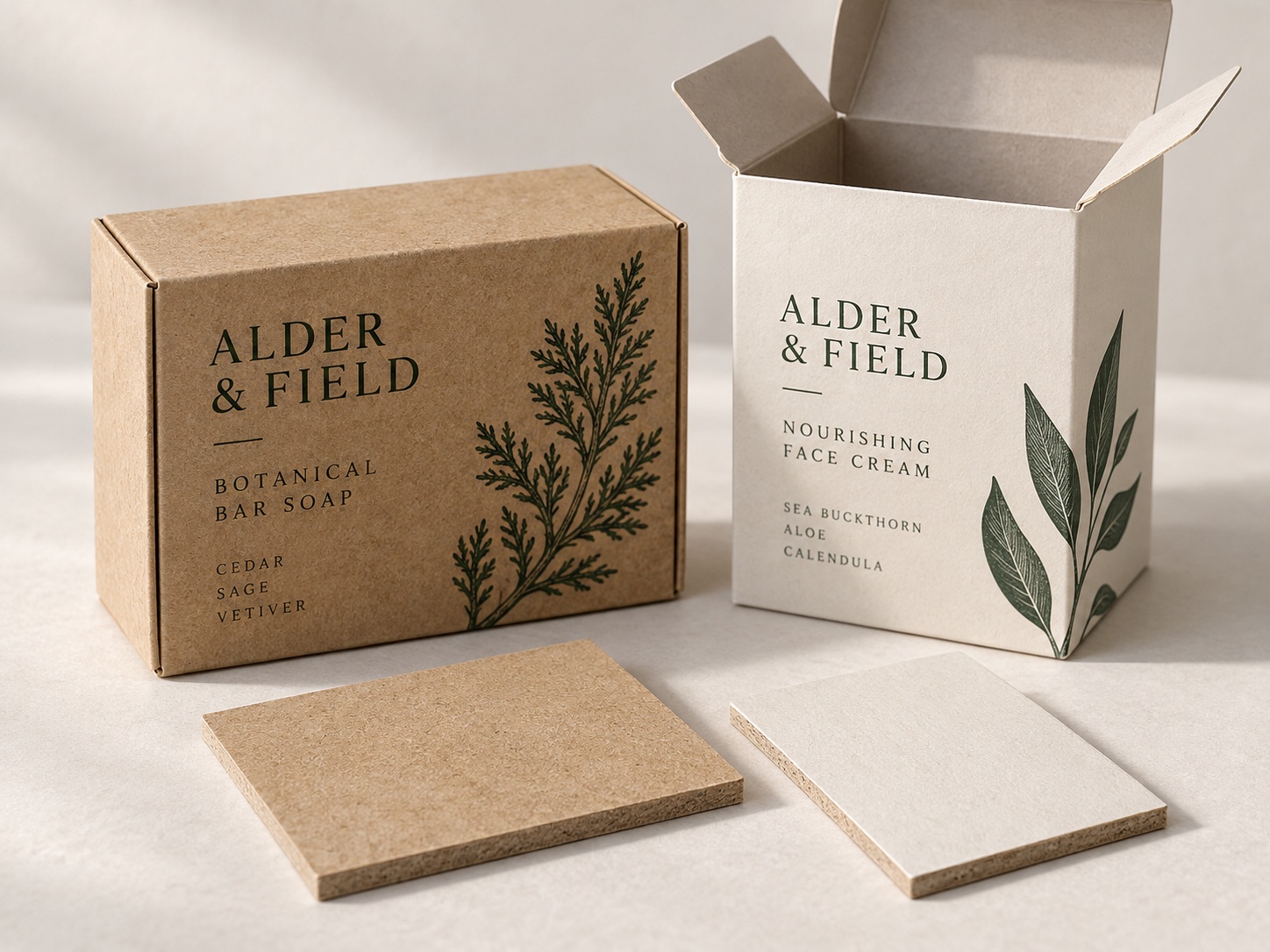
Kraft paperboard gives a natural brown base and visible texture. It can work well for soap, personal-care products, and restrained graphic designs. Brown stock changes the appearance of printed colors, so review a physical example if a pale color or fine detail is important.
White paperboard provides a lighter base for printed artwork. It is worth comparing when your design depends on bright colors, detailed illustrations, or a clean white background. The material name alone does not tell you the recycled content or end-of-life performance.
YBS's material and finish guide lists white SBS and brown kraft options, including an 18pt brown kraft board described as 100% post-consumer recycled. Confirm the current stock specification with your quote. Do not apply that percentage to every white, kraft, or finished package.
How coatings and laminates affect the decision
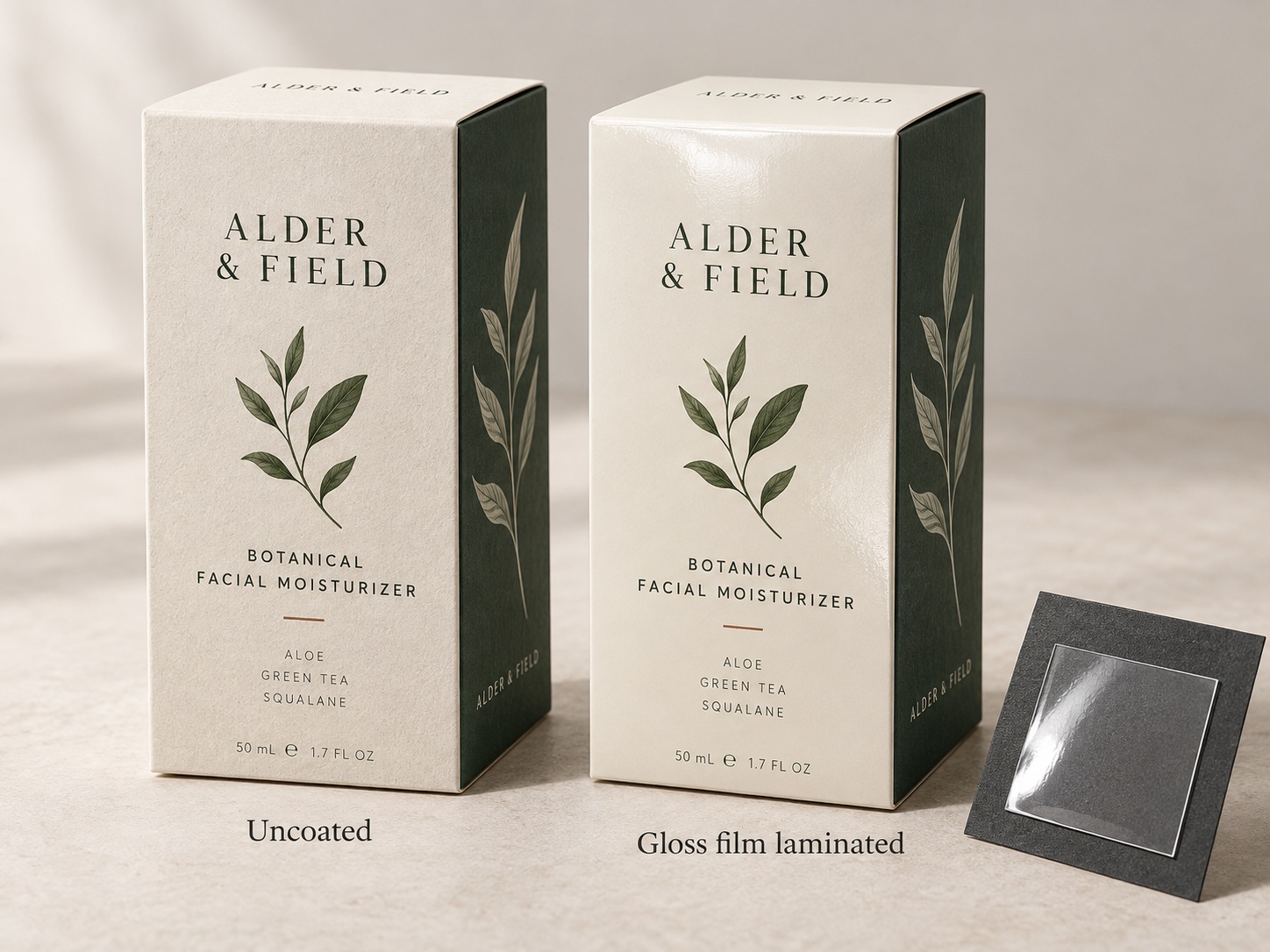
A finish can change both performance and the material combination. Gloss film, matte film, soft-touch laminate, and liquid coatings are different systems. Ask what is being applied and how the finished carton should be assessed for the intended recovery route.
Avoid two shortcuts: assuming that every coated box is unrecyclable, or assuming that every paperboard box is recyclable regardless of its finish. The answer depends on the specific construction and relevant collection and processing requirements.
For YBS kraft cartons, the public finish guide states that laminates and coatings are not offered on kraft; foil, embossing, debossing, and cutouts are listed options. If you want a tactile finish on a white carton, compare that route separately and ask about its material implications.
Ask about the actual printing process, not just the ink label
“Soy-based” or “water-based” does not describe every printing system or prove that a finished package has a lower overall impact. Ask which press, ink system, substrate, and finishing steps will be used for your job. Avoid adding an ink claim to your packaging simply because it appears in a general article.
YBS describes its printing and material practices on the sustainability page. Use that information to start a discussion about your specific order, especially if you need supporting documentation for a customer or retailer.
Right-size the box without sacrificing protection
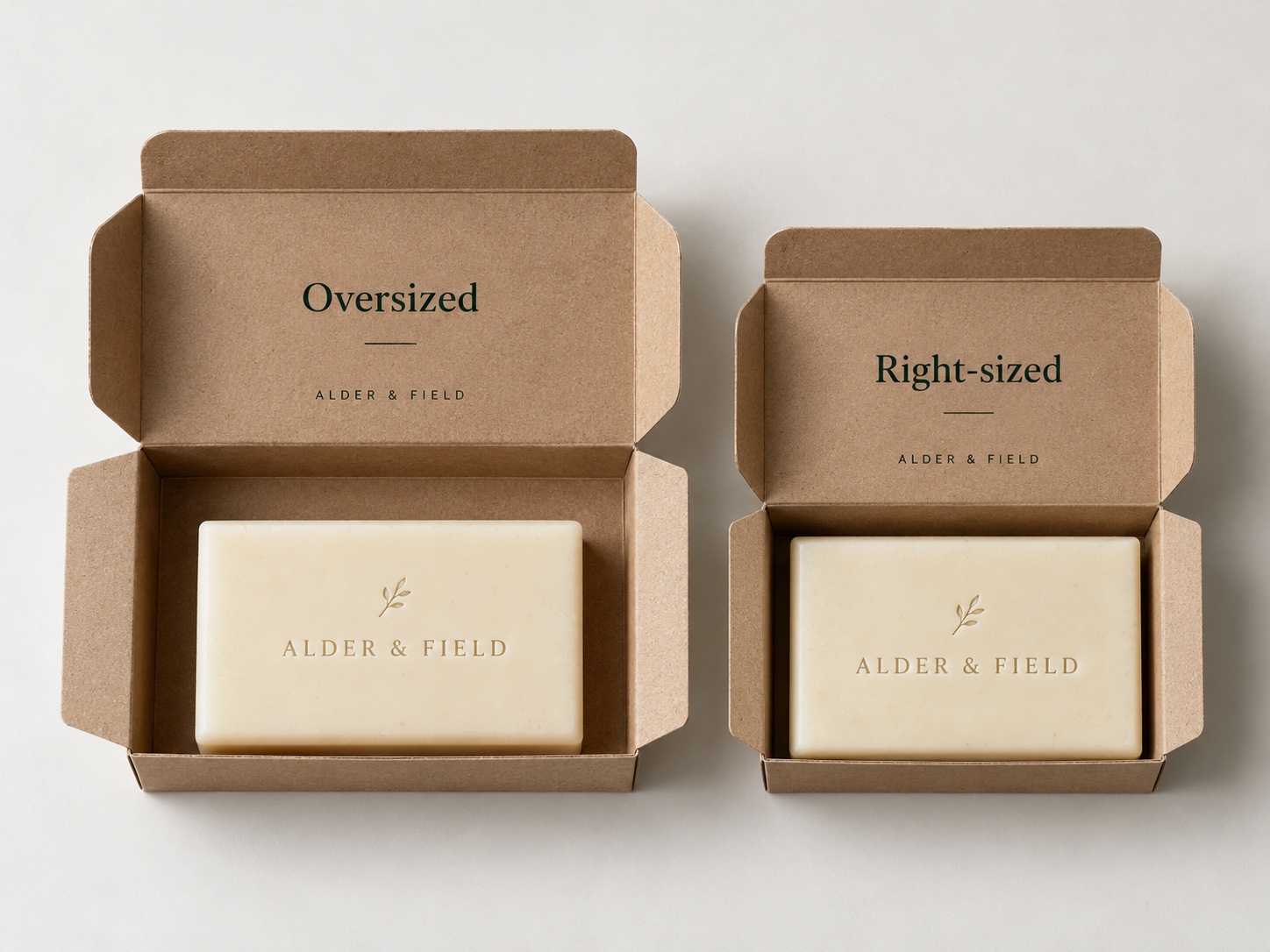
Measure the finished product, including its closure and label. Leave the clearance needed for packing and removal, but avoid choosing a much larger carton simply because it is familiar. A carton that is too tight can scuff the label or interfere with the closure; one that is too large can allow unnecessary movement.
For example, compare a fitted soap sleeve with a full carton based on the bar's handling and display requirements. For a glass serum bottle, consider the carton, insert, and outer shipper together. Removing a protective component is not an improvement if the product arrives damaged.
A material-selection checklist for your supplier
- Stock: what is the board grade, thickness, and documented recycled content?
- Finish: is the surface uncoated, liquid-coated, or film-laminated?
- Other components: can the insert, window, label, or sleeve be separated, and what is each made from?
- Performance: does the package still protect the actual product through handling and distribution?
- Disposal: what instructions are supported for the finished construction and intended market?
- Proof: which statements can the supplier substantiate for this specification?
Use our packaging sample checklist to evaluate the proposed materials before committing to production.
Eco-friendly packaging FAQs
Are kraft boxes always more sustainable than white boxes?
No single appearance establishes that comparison. Compare actual material specifications, printing and finishing, protection requirements, and the available disposal route.
Can a printed carton still be recyclable?
Printing alone does not answer the question. Ask about the complete material and finish combination, then check the relevant local acceptance rules.
Is biodegradable packaging the same as compostable packaging?
No. A general breakdown claim does not establish a defined composting process, timeframe, or accepted collection route. Ask for evidence and clear conditions.
Compare a specific packaging specification
Explore custom kraft boxes, review our board and finish options, or request material samples. For a production comparison, request a quote with your product dimensions, quantities, and intended use.
Updated October 13, 2026.

